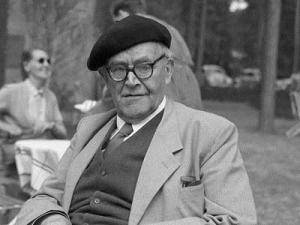
The relationship between philosophy and theology remains a varied thing, at least for me. In the Barth[ian] tradition there are a variety of takes on this relationship just the same. Barth himself sees a relative value to having an understanding of the various philosophies blowing about, whither and thither. But in the main, for Barth et al., an untoward appropriation and deployment of any philosophy vis-à-vis a Christian theology, ends up presenting a highly delipidated theology that bears no resemblance to the genuine article as Self-revealed in the prosopon (face) of Jesus Christ. Of note, as Barth is engaging with a doctrine of God and Nothingness, here we have an example of how he thinks of the Catholic’s deployment of the Aristotelian philosophical categories in the grammarization of their respective theology. As you read the following passage from Barth you will also notice him referring to these ‘modern thinkers,’ in regard to their respective impact upon the unfurling of an Enlightened and post-Enlightened theological offering (he is referring, in context, to his treatment of Heidegger and Sartre on a metaphysic and doctrine of nothingness per their respective existentialist [atheistic, in a way] theological offerings). So, a lot going on here: but as an evangelical calvinist I am wont to press Barth’s comment on the impact of Aristotle on the doing of Latin theology in general; he sees it as fallacious, as do I (as I/we have detailed with our Evangelical Calvinism books, and my blog posts here over the decades).
. . . And the position which Roman Catholicism gives to Aristotle as the philosopher par excellence was and is a very remarkable but also a very questionable matter. In theology, at least, we must be more farsighted than to attempt a deliberate co-ordination with temporarily predominant philosophical trends in which we may be caught up, or to allow them to dictate or correct our conceptions. On the other hand, there is every reason why we should consider and as far as possible learn from the typical philosophical thinking of the day. As we have listened to Leibniz and Scliliermacher [sic], so now we listen to these modern thinkers at a point which is particularly important for them and in which they may be able to teach or warn us in our own understanding of the theme.[1]
The theme, as already noted, has to do with a doctrine of nothingness (rather than somethingness). But again, what I wanted to draw our attention to was simply the way that Barth thinks a relationship between theology and philosophy. He doesn’t see no value in understanding the philosophers of the day, whatever period, and how their respective inklings might create a cultural milieu, which in turn might impact and even distort a reception of a genuinely conceived Christian theology. Indeed, it is primarily in this negative type of a way, even as it might contribute to the construction of a positively framed Christian theology, wherein Barth sees a legitimate placement and engagement with philosophy. Even so, in the end, what stands primary for Barth is the Word of God.
[1] Karl Barth, Church Dogmatics III/3 §50–51 [334] The Doctrine of Creation: Study Edition (London: T&T Clark, 2010), 44.