Category: Evangelical Calvinist
Writings from the blog: Athanasian Reformed (aka The Evangelical Calvinist). Senior Reformed scholars present a coherent and impassioned articulation of Calvinism for today’s world.

Barth’s Leibniz on an Anthropology and Nothingness
As I continue on with my linear read through of Karl Barth’s Church Dogmatics I have come across a small print section in CD III/3 §50, 30 wherein Barth is engaging with a doctrine of nothingness/sin. In this particular section he is commiserating with that Teutonic, Leibniz’s understanding on such matters. Without providing the necessary context I am simply going to drop some of my reflection on this following: Leibniz’s anthropology, according to Barth’s reading, was highly monistic in regard to what it means to be human vis a vis God’s perfections. Indeed, a rather dreary prospect for the Eschaton….
On the Thomistic Captivity of the Protestantisms: Knowledge of the triune God
Human agency is lost in the fall (which remains an inexplicable thing). The only hope for human agency to be reestablished before God is for God to re-create it as He has for us in the human agency of the Second and Greater Adam, who is the Christ. This is one reason people of a certain ilk reject the notion of a natural theology, and its subset in the anologis entis (analogy of being). Hence, knowledge of God is a purely Graced reality, and not a natural one in any way. I am, in fact, of said ilk (shocking!) I…
Book Impression: The Bible: A Global History
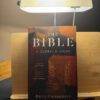
Just finished. This is the third book of Bruce Gordon’s I have read over the years (his other books: on Calvin and Zwingli respectively). Overall, a good and informative and interesting read. It appears to me that, Bruce, at points, has imbibed too much of the higher critical palate when it comes to thinking of the supernatural nature of Scripture. His chapter on the Pentecostal appropriation of the Bible isn’t the strongest. But again, overall, I would commend this book to you. It will give you a greater appreciation for the Bible’s reception across the millennia and across the globe….

The Christological Men: Karl Barth and TF Torrance
Barth and TF Torrance are the only modern theologians I have come across who if you don’t start with radically construed Chalcedonian premises, you won’t get. Their dialect is strictly christologically conditioned all the way down. This is one reason I think so many evangelical and conservative theologians of today write them off as incoherent. For example, theologians who harvest purely from the Post Reformed orthodox (pro), and some of the mediaeval theologians, will attempt to read Barth and TFT through the speculative, decretal categories they have imbibed vis-à-vis their recovery of said pro and med. theologians. And yet, this…

Book Impression: Visions of the End: Apocalyptic Traditions in the Middle Ages
I think I am going to start writing more ‘Book Impressions’ in the days to come, for the blog. I won’t be writing full fledged reviews, but just presenting my raw impressions as I finish this or that book. By the way, I do read a lot of theology books as time passes by; I just rarely share any of that here (you mostly get my Barth readings and reflections these days). Anyway, I just finished another book, and below is my reflection on it. The book: Bernard McGinn, Visions of the End: Apocalyptic Traditions in the Middle Ages. I started…
On The Trinity
The following is part of something I wrote back in 2008 on a doctrine of the Trinity. It requires greater context, particularly as these things relate to God’s freedom in election. But I’m simply going to parachute this in without its further context, to be provocative. With the above in mind, apply this being/becoming in the life of God to the incarnation of Christ; what does this imply? It implies that in the very ousia or being of God, the Son is always and already becoming deus incarnandus (God in the flesh Jn 1:14). In other words, what Jesus becomes in ‘historic time’, in…
On a James Whitean and Leighton Flowersian Naked Reading of the Bible
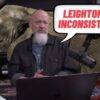
Thumbnail created originally by Leighton Flowers (Caleb) I was listening to James White live today on his Dividing Line vlogcast, and what he reinforces over and over is that he is what some are calling a ‘biblicist,’ or what I would identify as a solo Scriptura or nuda Scriptura proponent, as far as the way that he approaches Scripture. In this way, James White and his archnemeses, Leighton Flowers, ironically affirm the same bibliology and its attending hermeneutic. It is both modern, postEnlightenment, and Lockean (i.e., tabula rasa) in orientation. That is, it sees Scripture and its reception in a…
Abortion, Sex Trafficking: Its Antidote in the Strength of the Babe from Nazareth
O Lord, our Lord, How excellent is Your name in all the earth, Who have set Your glory above the heavens! 2 Out of the mouth of babes and nursing infants You have ordained strength, Because of Your enemies, That You may silence the enemy and the avenger. –Psalm 8 I want to underscore one simple yet profound point by way of reflection on the above Scripture. ‘Out of the mouth of babes and nursing infants You have ordained strength.’ Ultimately, we understand as Christians that there is an archetype Babe elected for the world from eternity past, born of the Virgin Mary, wrapped in swaddling cloths and…
Biblical Studies Has Failed the City of God
I read NT exegetes, particularly in their commentaries on Paul’s theology, and wonder if they ever wonder if they should in fact be doing so from the theo-logic inherent to the homoousion (the notion that Jesus is both fully God and fully human). Most don’t do this, which illustrates the flaw of their discipline-specific training in Biblical Studies. In other words, just as anti-supranaturalism has yeasted the discipline itself—that is to say, to approach the Bible as if it doesn’t have an inner, antecedent, supranatural reality; and that it can be read purely and critically as a historical artifact—it is…
On the Jews: God’s Free Choice
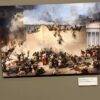
As Barth rightly argues, the Jewish people have been a non-people while at the same time the people of God throughout the millennia. Particularly after the destruction of Jerusalem in 70 AD, by Titus Vespasian of the Roman empire, the Jewish people strangely have wandered about throughout the nations, seemingly in a continued exile and disrepute, such that they are scorned; but mysteriously so. People don’t really understand why they are anti-Semitic versus being anti-Laotian, or against some other identifiable people group. There is something much deeper, much more spiritual to anti-Semitism than the profane mind could come to fathom….