Karl Barth operated with his own reformulated Christologically conditioned Covenantal theology. For Him there is one covenant (of grace), just as sure as there are two covenants, if not three (covenant of works, covenant of grace, pactum salutis i.e., covenant of redemption) that the Federal or classically covenantal theologians such as Cocceius, Ursinus, Olevianus, Bullinger et al. articulated. Barth was a strident critic of Federal or classical Covenantal theology, insofar that he detected a primacy of the Law as the antecedent ground upon which the conditions of the covenant of grace are ultimately fulfilled in the coming of Christ for the elect. That is to say, when Christ comes, as the decree of God prescribes, according to Federal theology, Jesus actively obeys all of the commands of the covenant of works (Law) thereby fulfilling the conditions required for a full justification, again, for the elect, to obtain. This fulfillment, per the federal structure, as decretally determined by God before the foundations of the world (e.g., decretum absolutum), is what the “Feds” identify as the covenant of grace. And within this schema, many of the federalists, also place what is often referred to as the pactum salutis (pact or contract of salvation), into the mix of the economic outworking of the covenant of works/grace within the type of Heilsgeschichte (‘salvation history’) they envision.
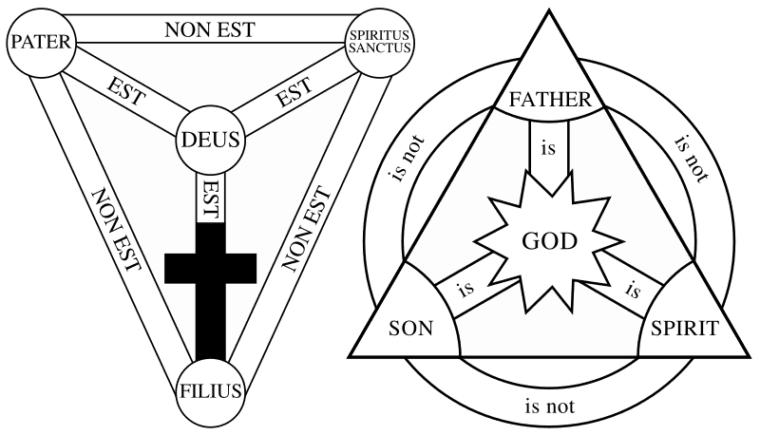
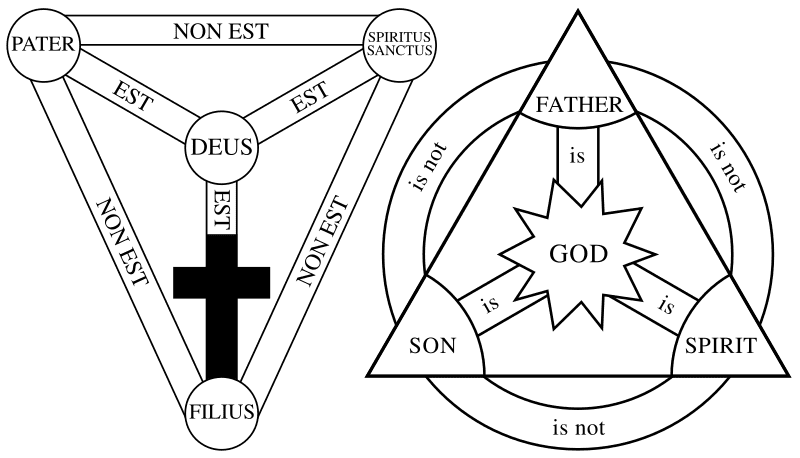
Conversely, we have a theological incoherency; or so I will suggest, and Barth will identify in the passage I share from him shortly. Ultimately, the incoherency present within the schema presented by Federal theology affects a proper doctrine of God. What I will suggest, after Barth’s passage is shared, and in concert with his critique of the pactum salutis, is that Federal theology, inadvertently, suffers from a subordinationist, even an eternal functional subordination of the Son (EFS), insofar that the Son is understood to be a distinct center of conscious, indeed, organ of God in obediently carrying out the decree of God (and a decree that is abstract and decoupled from the triune personage of the Monarchia [‘Godhead’]. Here is what Barth has to communicate with reference to the errancy of the Pactum:
[5] The riddle posed by the older Federal theology at this its strongest point appears to be insoluble. But perhaps we shall find the solution if we examine rather more closely how it understood the eternal basis of the covenant of grace. As we have seen, it was taken to consist in an intertrinitarian decision, in a freely accepted but legally binding mutual obligation between God the Father and God the Son. Now there are three doubtful features in this conception.
For God to be gracious to sinful man, was there any need of a special decree to establish the unity of the righteousness and mercy of God in relation to man, of a special intertrinitarian arrangement and contract which can be distinguished from the being of God? If there was need of such a decree, then the question arises at once of a form of the will of God in which this arrangement has not yet been made and is not yet valid. We have to reckon with the existence of a God who is righteous in abstracto and not free to be gracious from the very first, who has to bind to the fulfilment of His promise the fulfilment of certain conditions by man, and punish their non-fulfilment. It is only with the conclusion of this contract with Himself that He ceases to be a righteous God in abstracto and becomes the God who in His righteousness is also merciful and therefore able to exercise grace. In this case it is not impossible or illegitimate to believe that properly, in some inner depth of His being behind the covenant of grace, He might not be able to do this. It is only on the historical level that the theologoumena of the foedus naturae or operum [covenant of nature or works] can be explained by the compact of the Federal theology with contemporary humanism. In fact it derives from anxiety lest there might be an essence in God in which, in spite of that contract, His righteousness and His mercy are secretly and at bottom two separate things. And this anxiety derives from the fact that the thought of that intertrinitarian contract obviously cannot have any binding and therefore consoling and assuring force. This anxiety and therefore this proposition of a covenant of works could obviously never have arisen if there had been a loyal hearing of the Gospel and a strict looking to Jesus Christ as the full and final revelation of the being of God. In the eternal decree of God revealed in Jesus Christ the being of God would have been seen as righteous mercy and merciful righteousness from the very first. It would have been quite impossible therefore to conceive of any special plan of a God who is righteous in abstracto, and the whole idea of an original covenant of works would have fallen to the ground.[1]
Briefly, points of response. Firstly, Barth argues: there is no point in constructing a covenant of works to begin with. He argues that this ultimately is really a matter of adding a hermeneutical exemplum where God’s Self-revelation, attested to in Holy Scripture, never prescribed the need for one; at least not beyond what the text of Scripture itself is premised upon in regard to its reality in Jesus Christ. If our first encounter with God in Christ is Genesis 1:1, “in the beginning God created,” then it becomes artificial to construct a latterly construed beginning point with God that is based upon an ad hoc construct wherein God first relates to us on some aspect of Law (e.g., covenant of works). Secondly, for Barth, to posit this type of negative or abstract starting point for a God-human relationship, ends up relying on the speculative machinations of the philosophers and theologians rather than the positive affections provided for by God first encountering us in the face of Jesus Christ (in the grace of creation by God’s Word cf. John 1:1). Thirdly, for Barth, when this type of competitive relationship between God and humanity, based on an abstract notion of Law, is introduced into the eternal life of God, we end up with two distinct concepts of righteousness within the Godhead; i.e., wherein the Son, subordinately, submits whatever His sense of righteousness might be to that of the Father’s sense of righteousness. This is where I would argue the pactum salutis inherently lends itself to a social trinitarianism of the type where the Son can be understood as eternally subordinate to the Father. Fourthly, as inferred from Barth’s reasoning, we end up with a ’God behind the back of the covenantal schema’ in Federal theology, which entails the notion that we can never be quite sure if His ostensible revealed will is eternally in correspondence with His eternal or hidden will insofar there is no necessary relationship between His eternal and triune person and His work in salvation in the lineaments of a historical history.
Alternatively, and rightly, Barth simply scrubs the whole framework posited by a federal theology in favor of building his covenantal schema on the direct and immediate Self-revelation of God; indeed, without additions. Barth’s approach, I would argue, fits Occam’s Razor much better than Federal theology does, insofar that Barth doesn’t need to add unnecessary accretions to what God has already and intelligibly revealed in regard to the Gospel. That is, that rather than constructing a salvation-framework that adds more to the Gospel understanding, ostensibly, that Barth is biblically comfortable with working from the person and work of God in Christ as if the whole revelation of God without adumbration. When accretions are added, we end up with the heterodox and heretical liminalities that Barth has correctly highlighted for us in his critique of the pactum salutis in particular, and Federal theology in general. In other words, for Barth (and TFT and John the theologian): ‘when we see Jesus we see the Father’ without hesitation.
[1] Karl Barth, Church Dogmatics IV/1 §57 [065] The Doctrine of Reconciliation: Study Edition (London: T&T Clark, 2010), 61–2.