. . . It is not a loud and stern and foreign thing, but the quiet and gentle and intimate awakening of children in the Father’s house to life in that house. That is how God exercises authority. All divine authority has ultimately and basically this character. At its heart all God’s ruling and ordering and demanding is like this. But it is in the direction given and revealed in Jesus Christ that the character of divine authority and lordship is unmistakably perceived.[1]
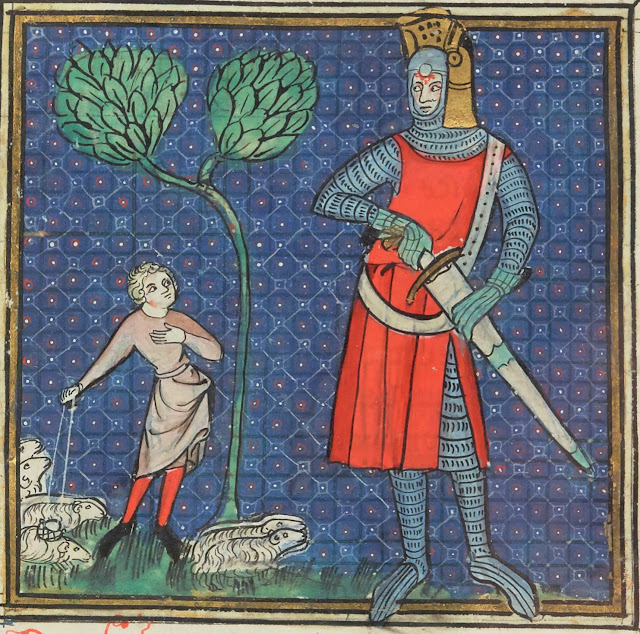
This follows from knowing God first as Father of the Son mediated through the Son by the Holy Spirit. And this is to the point and heart of an Evangelical Calvinism Athanasian Reformed mode of theological and Christian existence. The Son, the eternal Logos conditions the way we approach the Father, just as the Son has eternally indwelt the bosom of the Father. There is no discursive routing here and there on a way up to God to be taken. There is only the Son descended (exitus) to the point of death the death of the cross, and new humanity ascended (reditus) on the healing wings of the Holy Spirit as He in Christ takes us to the glory the Son has always already shared eternally with the Father. Indeed, it is in this oikonomia (economy) that God has freely chosen to make Himself known to and for the world, in the face of Jesus Christ. God’s exousia (authority) is not an authority of an abstract monad back yonder in the ethereal gases of the philosophers; such that He is some type of Goliath God. Nein. God’s authority, His sovereignty, His power is that of a gentle father with his children; it is a filial familial authority.
This is the interminable perduring seemingly unquenchable battle of the God of Jerusalem versus the God of Athens. God is Father of the Son, as Athanasius has intoned, or he is simply an abstraction plastered onto the God of the Bible; as if some type of graffiti that would seek to draw attention to its own self-projected beauty rather than the beauty of God’s manger and cross in Christ. Choose you this day who you will serve.
[1] Karl Barth, Church Dogmatics IV/1 §58 [100] The Doctrine of Reconciliation: Study Edition (London: T&T Clark, 2010), 97.