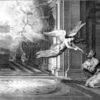
Getting Deep into Sin: Moving Beyond Our Therapized Sin Through Christ
And Jesus answered and said to him, “Simon, I have something to say to you.” So he said, “Teacher, say it.” “There was a certain creditor who had two debtors. One owed five hundred denarii, and the other fifty. And when they had nothing with which to repay, he freely forgave them both. Tell Me, therefore, which of them will love him more?” Simon answered and said, “I suppose the one whom he forgave more.” And He said to him, “You have rightly judged.” Then He turned to the woman and said to Simon, “Do you see this woman? I entered your house; you gave Me no water for My feet, but…

ELCA World Hunger Education and Networking Grants
The application period for 2022 ELCA World Hunger Education and Networking Grants will open in early Spring. Get notified when the application opens by subscribing to the ELCA World Hunger blog in the box on the left side of this page. Hunger Education and Networking Grants are one of the ways ELCA World Hunger accompanies congregations, synods, organizations, partners and local teams throughout the US and the Caribbean. We know that learning about the root causes of hunger and effective responses is key to ending hunger locally and globally. That’s why we are excited to share that our application…

Week of Prayer for Christian Unity and Beyond
The following is an invitation from the Graymoor Ecumenical and Interreligious Institute (GEII). All content and images are shared with the permission of GEII. January 18-25, 2022 Please join the Franciscan Friars of the Atonement, Graymoor Ecumenical & Interreligious Institute, and the Interchurch Center Committee on Ecumenical, Interfaith, and Community Concerns, for a live-streamed Ecumenical Service of the Word in observation of the 2022 Week of Prayer for Christian Unity. Wednesday, January 19th, 2022 12:00 PM Eastern (GMT-5) Online via Facebook: Join Here Free and open to the public; the service will remain available online for later viewing. The 2022 theme…

Situation Report: Colorado Wildfires
Situation On Dec. 30, the Marshall Fire ignited in Boulder County, Colo. Over 6,200 acres burned quickly, forcing the evacuations of 35,000 people. The fire spread throughout suburban neighborhoods, destroying nearly 1,000 homes. While December wildfires are rare, the severe drought in the western United States created hazardous conditions that allowed the Marshall Fire to spread rapidly. This unusual fire is one of the impacts of a changing climate and will become increasingly more common. Response The Rocky Mountain Synod is collaborating with pastors and congregations impacted by the fires to develop a coordinated response and mobilize resources for communities….
Remembering Susan Palo Cherwien (May 4, 1953-December 28, 2021)
Susan Palo Cherwien, Lutheran hymnwriter and poet, died December 28, 2021. Her hymns and meditations have been a gift to the church and world. Eight of her hymns are included in Evangelical Lutheran Worship: As the Dark Awaits the Dawn 261 Come, Beloved of the Maker 306 Day of Arising 374 O Blessed Spring 447 Rise, O Church, like Christ Arisen 548 Beloved, God’s Chosen 648 Signs and Wonders 672 In Deepest Night 699 Eight hymns are also included in All Creation Sings, the worship and song supplement to ELW: As Your Spirit in the Desert 923 Christ Is the…
A Doctor of Theology
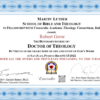
I have had contact with Dr. Enrique Ramos for quite a few years via Facebook. He just recently reached out to me and out of the blue said he and the institution he represents (along with the Sub-Director of that institution, Dr. Fred Macharia) had an award they wanted to confer upon me. He said they both were thankful and appreciative for the work I have been doing with our edited books on Evangelical Calvinism, along with the furtherance of that through my other writings (here etc). He asked me what my legal given name was, I wasn’t sure why….
1/ Reviewing Bruce McCormack’s: The Humility of the Eternal Son
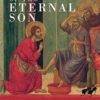
I am going to attempt to write a series of blog posts that will be sections of what potentially could be turned into a review essay on chapter 7 (the final chapter) of Bruce McCormack’s book The Humility of the Eternal Son: Reformed Kenoticism and the Repair of Chalcedon. Chapter 7 is where McCormack presents his constructive proposal on what he considers to be the needed ‘repair’ of Chalcedonian Christology. As the reader will see, he doesn’t abandon Chalcedon, he constructively engages with it offering an interesting proposal that I believe might be a way forward for thinking the Divinity and humanity of…

“Christian Theology” as an Insecurity
The thought occurred to me last night that much of the theological developments over the last many centuries, particularly during and post-mediaeval times stem from personal insecurities. Ludwig Feuerbach famously made the observation that ‘theology is anthropology,’ that it is the self’s projection of its self-perceived notion of virtuousness and greatness. Here’s an anonymous description taken from an anonymous source: “Feuerbach claimed that our conceptions of “god” are always just projections of our own values. God fulfills our need to objectify our virtues, and embodies our values. Thus the essence of religion is human nature, and our Gods tell us about ourselves…”theology…
A Riposte to Craig Carter: Seeking to Be Richard Muller Redivivus with Reference to Repristinating the “Golden Age” of 16th and 17th C. Scholastic Protestantism
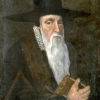
The following from, Craig Carter, epitomizes what I have been writing against ever since I started my online blogging life in 2005. For me, my work against this sort of trope, started in 2001-02 when I started seminary. As I’ve told many a time, my professor, Ron Frost (who would go on to become a mentor and someone I did teaching fellowships for in Historical Theology and Ethics), introduced me to this world. Frost had his own go arounds with the father of this movement, Richard Muller; they had an exchange in Trinity Journal back in 96—97. What Carter is…

Knowledge of God: Irruptive Rather Than Domestic
I think sometimes folks aren’t appreciating the rub between what Barth (Torrance et al.) are doing when they offer an alternative—to classical theism—theory knowledge of God. It orbits around a question; a question Keith Johnson articulates with great clarity: Romans I Barth began concentrated study on Paul’s Epistle to the Romans a few months after delivering ‘The Righteousness of God’. The experience was slow-going, at least by the standards of his later output. The extra time spent on the manuscript, however, meant that Barth’s understanding of the distinctions and categories that had been working subtly throughout ‘The Righteousness of God’ had time…