Tag: Critique
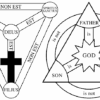
On A Critique of the Pactum Salutis and its Inherent Social [subordinationist] Trinitarianism
Karl Barth operated with his own reformulated Christologically conditioned Covenantal theology. For Him there is one covenant (of grace), just as sure as there are two covenants, if not three (covenant of works, covenant of grace, pactum salutis i.e., covenant of redemption) that the Federal or classically covenantal theologians such as Cocceius, Ursinus, Olevianus, Bullinger et al. articulated. Barth was a strident critic of Federal or classical Covenantal theology, insofar that he detected a primacy of the Law as the antecedent ground upon which the conditions of the covenant of grace are ultimately fulfilled in the coming of Christ for…

Barth’s Engagement with Mary Baker Eddy and Christian Science: A Quasi Critique of the New Age
Mary Baker Eddy The following represents something that I found rather surprising in Barth’s Church Dogmatics. In a context where Barth is discussing the strength and weakness of the human body, he goes into a small-print excursus on Christian Science and Mary Baker Eddy. As I have been reading through the CD what I have found is that many of the themes Barth is known for, while present, only really represent a fraction of his overall corpus. Indeed, those themes (election etc.) are contextually conditioning for all of his work, even his thinking on the human body and physicality. But…
The Character of Barth’s Kantian and Feuerbachian Critique of the Metaphysical gods
Ludwig Feuerbach Karl Barth is often identified as a neo-Kantian, or just straight up Kantian in his theological orientation (and methodology). It seems too facile to me to maintain that Barth was somehow a slavish servant of Kant, especially materially. Maybe formally, Barth could be understood to be a Kantian in certain qualified ways. But in the air he breathed to be “Kantian” or neo-Kantian would be like saying that John Calvin et al. was an Aristotelian, or Scotist for that matter. The point being, often, formalities are not the all-encompassing thing in the theological project. Ultimately, what is at…

A Critique of John MacArthur’s ‘Word Faith Theology’: On the Relationship Between Five Point Calvinism and Human Psychology
I work the graveyard shift at work. I have a work vehicle I drive around in all night. And so, I often will listen to Christian radio. The lineup of pastors they have preaching throughout the night includes John MacArthur’s Grace To You broadcast. The broadcast for January 6th, 2023 was a sermon MacArthur originally delivered back in 1989. The sermon title is: Spiritual Stability, Part 3: Humility and Faith—Phil. 4:5-6a. So, he’s clearly going to be discussing anxiety, and its cure by trusting and resting in Christ. And absolutely, the Lord, as we humbly and boldly come to His…