Tag: Doctrine
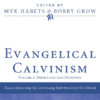
An Evangelical Calvinist Doctrine of Assurance of Salvation
From the conclusion of my personal chapter from my second edited book (with Myk Habets), “Assurance is of the Essence of Saving Faith” Calvin, Barth, Torrance, and the “Faith of Christ”. CONCLUSION What we have come to see is that assurance of salvation, dogmatically understood, is fully grounded in Jesus Christ. From Calvin, to Barth, to Torrance, union with Christ and the vicarious humanity of Christ provides the foundation for how to understand assurance of salvation and how it should be framed; that the faith of Christ for us is the only real saving faith, as such elect people can…

John Calvin Juxtaposed with Theodore Beza on a Doctrine of Assurance of Salvation
Calvinism is not a monolithic reality (thus this blog), historically, often times I find, when interacting with classic Calvinists, that there is the pervasive belief that “their” tradition is pure gospel without development. I think the following, at least, illustrates that this is too reductionistic, and in fact there is significant disagreement between someone like John Calvin (Evangelical Calvinist par excellence) and Theodore Beza (classic Calvinist the fountain-head), on the ordo salutis and the decrees. In Richard Muller’s book: Christ and the Decree: Christology and Predestination in Reformed Theology From Calvin to Perkins, he is discussing Theodore Beza’s articulation of Christ and the decrees relative…
The Last Word on a Reformed Doctrine of Election and Reprobation
You go online in the Reformed space, and you get the same old trope on a doctrine of election and reprobation; you essentially get the L (imited Atonement) of the TULIP served up as the ‘hard teaching’ Gospel truth reality about the way God relates to part of humanity in a God-world relation. I am here to set the record straight once and for all! This is simply not how God has related to the world, and this based on the analogy of the incarnation. We aren’t groping around in the darkness for snipes, but as Christians, instead, we have…