Tag: God’s
God’s Beauty in Jonathan Edwards’ Theology: With a Flourish of Inspired Worship
A word from American theologian par excellence, Jonathan Edwards, on the beauty of the triune God: It is unreasonable to think otherwise, than that the first foundation of a true love of God, is that whereby He is in Himself lovely, or worthy to be loved, or the supreme loveliness of His nature. This is certainly what makes Him chiefly amiable. What chiefly makes a man, or any creature lovely, is his excellency; and so what chiefly renders God lovely, and must undoubtedly be the chief ground of true love, is His excellency. God’s nature, or the Divinity, is infinitely…
March 15, 2026 – Seeing God’s Light Beyond Appearances
Prepare Samuel thinks he knows what a king should look like: strong, tall, impressive. Yet, God challenges him on this notion, declaring, “The Lord does not see as mortals see; they look on the outward appearance, but the Lord looks on the heart.” This same theme of seeing beyond appearances in John 9 emerges when Jesus heals a man born blind and invites everyone present to reconsider what true sight really means. What should be a moment of joy becomes a debate. The disciples assume someone must have sinned. The neighbors doubt what they see. The religious leaders question the…
God’s Adversary and Ours: A Brief Theology of the Devil / A Book Impression
Just finished. It is a good provocative read. It is written in a nice narratival theological style, which definitely works within the spirit and ambit of the Barth style (i.e. engagement with Holy Scripture throughout). Philip re-places a doctrine of the devil into the second article, so, Christology and Soteriology (think Apostle’s Creed) versus the traditional placement as found in the first article with reference to original creation and God’s providence. This reorients thinking the devil from emphasizing him as a fallen angel, and instead sees him primarily in the scenery of the wilderness, as the adversary (of Christ), as…
Grace as God’s Person[s]: Being in Becoming
An email question from a reader of the blog: 𝑂𝑛𝑒 𝑡ℎ𝑖𝑛𝑔 𝐼 𝑎𝑚 𝑡𝑟𝑦𝑖𝑛𝑔 𝑡𝑜 𝑚𝑎𝑘𝑒 𝑠𝑒𝑛𝑠𝑒 𝑜𝑢𝑡 𝑜𝑓 𝑖𝑠 𝑡ℎ𝑒 𝐵𝑎𝑟𝑡ℎ𝑖𝑎𝑛 𝑖𝑑𝑒𝑎 𝑡ℎ𝑎𝑡 𝐽𝑒𝑠𝑢𝑠 𝐶ℎ𝑟𝑖𝑠𝑡 𝑖𝑠 “𝑔𝑟𝑎𝑐𝑒” 𝑒𝑚𝑏𝑜𝑑𝑖𝑒𝑑. 𝐼 𝑟𝑒𝑎𝑑 𝑦𝑜𝑢𝑟 𝑝𝑜𝑠𝑡𝑠 𝑎𝑏𝑜𝑢𝑡 𝑖𝑡. 𝑆𝑜 𝑛𝑜 𝑝𝑟𝑒𝑣𝑒𝑛𝑖𝑒𝑛𝑡 𝑔𝑟𝑎𝑐𝑒 𝑎𝑛𝑑 𝑛𝑜 𝑖𝑟𝑟𝑒𝑠𝑖𝑠𝑡𝑖𝑏𝑙𝑒 𝑔𝑟𝑎𝑐𝑒. 𝑊𝑒 ℎ𝑎𝑣𝑒 𝐽𝑒𝑠𝑢𝑠 𝑤ℎ𝑜 𝑖𝑠 𝐺𝑜𝑑’𝑠 𝑔𝑟𝑎𝑐𝑒. 𝐼𝑠 𝑡ℎ𝑎𝑡 𝑟𝑖𝑔ℎ𝑡? 𝑊ℎ𝑒𝑛 𝑡ℎ𝑒 𝐵𝑖𝑏𝑙𝑒 𝑠𝑎𝑦𝑠, “𝑏𝑦 𝐺𝑟𝑎𝑐𝑒 𝑦𝑜𝑢 ℎ𝑎𝑣𝑒 𝑏𝑒𝑒𝑛 𝑠𝑎𝑣𝑒𝑑…” 𝐼𝑠 𝑃𝑎𝑢𝑙 𝑗𝑢𝑠𝑡 𝑟𝑒𝑝𝑙𝑎𝑐𝑖𝑛𝑔 𝐽𝑒𝑠𝑢𝑠 𝑤𝑖𝑡ℎ 𝑡ℎ𝑒 𝑤𝑜𝑟𝑑 𝑔𝑟𝑎𝑐𝑒? 𝐶𝑎𝑛 𝑦𝑜𝑢 𝑝𝑙𝑒𝑎𝑠𝑒 ℎ𝑒𝑙𝑝 𝑚𝑒 𝑢𝑛𝑑𝑒𝑟𝑠𝑡𝑎𝑛𝑑 𝑡ℎ𝑖𝑠? My brief response: 𝐒𝐨, 𝐁𝐚𝐫𝐭𝐡 (𝐚𝐧𝐝 𝐨𝐭𝐡𝐞𝐫𝐬, 𝐉𝐮̈𝐧𝐠𝐞𝐥, 𝐓𝐅 𝐓𝐨𝐫𝐫𝐚𝐧𝐜𝐞), 𝐟𝐨𝐥𝐥𝐨𝐰𝐬 𝐚 𝐭𝐡𝐞𝐨𝐥𝐨𝐠𝐢𝐜𝐚𝐥 𝐚𝐜𝐭𝐮𝐚𝐥𝐢𝐬𝐦, 𝐰𝐡𝐢𝐜𝐡 𝐞𝐧𝐭𝐚𝐢𝐥𝐬 𝐚 “𝐛𝐞𝐢𝐧𝐠 𝐢𝐧 𝐛𝐞𝐜𝐨𝐦𝐢𝐧𝐠.” 𝐓𝐡𝐢𝐬…

The Character of Barth’s Kantian and Feuerbachian Critique of the Metaphysical gods
Ludwig Feuerbach Karl Barth is often identified as a neo-Kantian, or just straight up Kantian in his theological orientation (and methodology). It seems too facile to me to maintain that Barth was somehow a slavish servant of Kant, especially materially. Maybe formally, Barth could be understood to be a Kantian in certain qualified ways. But in the air he breathed to be “Kantian” or neo-Kantian would be like saying that John Calvin et al. was an Aristotelian, or Scotist for that matter. The point being, often, formalities are not the all-encompassing thing in the theological project. Ultimately, what is at…

Torrance’s Theological-Exegetical Gloss on Romans 8:31-39: And a Word of Encouragement About God’s Unrelenting Love For Us
As I have been rereading TF Torrance’s The Christian Doctrine of God: One Being Three Persons, I came across a passage that struck me as a sort of theological-exegetical gloss of Romans 8:31-39. Torrance is often accused of not doing any biblical-exegetical work; but I would counter, that in his role as a Christian Dogmatist his work is saturated in the thematics that allow Scripture to say what it does about God and His works. I would contend that, Torrance, as a Christian Dogmatist, par excellence, has Scriptural themes and their reality in Christ, pervading all of his writings. What is required…

Barth on the ‘malady of homosexuality’: God’s Word as the Antidote to Cultural Mythos
Karl Barth, on his development of a human sexuality, rails against the malady and disobedience represented by any expression of a homosexuality; or any other deviances further downstream, as those also develop therefrom. The 21st century Barth world, ironically, is dominated by progressives and sociological liberals. Such postBarthians, in order to keep their status, mostly in the halls of the academy, must attempt to marginalize or altogether avoid Barth’s thinking on a human sexuality; particularly as he develops that in Church Dogmatics III/4 §54. In order, to provide a register of this Barthian development, since I have never seen anyone…

The Dandelion of God’s Kingdom in the Midst of the Profanus Communio: With Reference to Charlie Kirk
Charlie Kirk was just a guy, a highly motivated and gifted brother. He was constrained by the love of Christ. He saw himself as an emissary for Jesus Christ. And it was because of all of this that he died a Christian martyr’s death. He was too young, some would say (I would). And yet, the Lord has a story, has a ministry, a service for each one of us who are His own. Sometimes that story entails living a long life on this earth, eighty or ninety years, maybe. And other times, like my little brother, it only lasts…
Spitballing on God’s Sovereignty and Contingent Freedom
How does God’s sovereignty work, in a God-world relation? First, to speak of God’s sovereignty can never be done so in abstraction from God’s cruciform life for the world in Jesus Christ. It is from within this unio mystica (‘mystical union’) of God and humanity, in the particularity of the man from Nazareth, Jesus Christ, wherein God’s actions, where His power, His sovereignty and everything else must be thought. When we ponder the end for which God humiliated Himself in the Son for the world, we recognize that this ponderance goes back even before the foundations of the world; indeed,…
On the Jews: God’s Free Choice
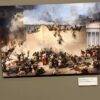
As Barth rightly argues, the Jewish people have been a non-people while at the same time the people of God throughout the millennia. Particularly after the destruction of Jerusalem in 70 AD, by Titus Vespasian of the Roman empire, the Jewish people strangely have wandered about throughout the nations, seemingly in a continued exile and disrepute, such that they are scorned; but mysteriously so. People don’t really understand why they are anti-Semitic versus being anti-Laotian, or against some other identifiable people group. There is something much deeper, much more spiritual to anti-Semitism than the profane mind could come to fathom….