Tag: Work
Dignity of Work Historically and Today
By Emily Ahern, ELCA Hunger Advocacy Fellow [About the Author] On May 1st, many observed the public holiday May Day, otherwise known as International Workers’ Day. This day is set aside specifically to commemorate working class people and to shed light on the demands made by people involved in the labor movement. Christians have intertwined with this movement, historically and today, and Lutheran teaching shapes our point of view. A HISTORICAL PERSPECTIVE May 1 was specifically chosen to commemorate the strike which would culminate in the Haymarket Riot, a clash between labor protesters and police on May 4, 1886…

The Work of Christ is the Person of Christ: Against Dualistic Classical Theology
When the work of Christ is separated from the person of Christ, all you can be left with are either pure Pelagian or semi-Pelagian doctrines of salvation; as that becomes funded by some functional type of an adoptionistic christology (e.g., Ebionism etc.) This is why TFT refers to the Latin Heresy: he is referring to theologies, Western-Augustinian ones, that ultimately don’t think salvation, as both objectified and subjectivized in the Monarxia of God in the person of Jesus Christ. When this or that individual person is understood as being “elect” of God, based on an arbitrary and hidden decree of…
Hard and holy work of depolarization
By Kayla Zopfi, ELCA Hunger Advocacy Fellow[about the author] “When we talk to someone who shares the same Christian faith, but has a different set of political beliefs or convictions, it can be uncomfortable, or frustrating, and sometimes even scary. As members of the ELCA, we believe that we can have different political opinions but be of the same faith,” asserts Presiding Bishop Elizabeth Eaton in her November 2, 2022 video addressing Christian Nationalism. Bringing people together because of, rather than despite, political differences has been a successful value nurtured in many congregations and synods, as well as by us…
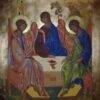
Craig Carter Has Some Work to Do on God: Getting God Right as Threeness and Oneness
Dr. Craig Carter continues to promote the Christian Aristotelian/Thomist theologies of the Westminster Confession of Faith and the London Baptist Confession of Faith, with particular focus on their respective doctrines of God. He just tweeted the following: If someone tells you that God has passions, remember that to say that is to go against the teaching of our reformed confessions. Presbyterians & Reformed Baptists cannot go there. “There is but one only living & true God, a most pure spirit, invisible without body, parts, or passions, immutable, immense, eternal, incomprehensible, almighty, most wise, most holy, most free, most absolute, working…